
CO2 laser resurfacing is one of the most effective treatments available for sun damage, acne scarring, deep wrinkles, and uneven skin texture. It is also one of the most significant investments in aesthetic medicine. Understanding the true cost of CO2 laser treatment, what drives pricing differences, and how it compares to alternatives helps you make an informed decision about whether this procedure is the right fit for your goals and budget.
At Allen Medical Aesthetics, we believe in transparent pricing and want patients to understand exactly what they are paying for. This guide breaks down national averages, the factors that influence your individual cost, and how to evaluate whether CO2 laser resurfacing is a worthwhile investment for your skin.
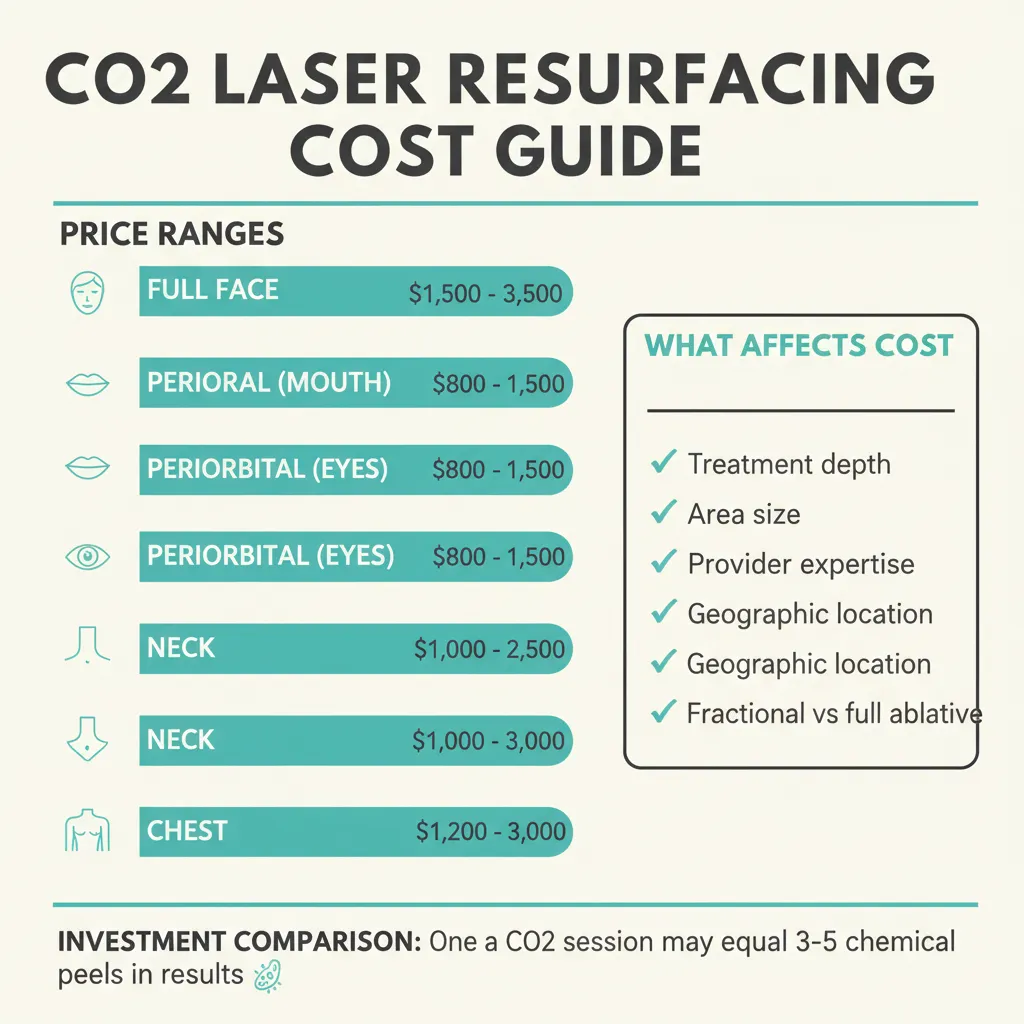
According to the American Society of Plastic Surgeons, the national average for a CO2 laser treatment is $2,509. Your actual cost depends on the treatment area, whether a fractional or fully ablative technique is used, and provider expertise. A full-face fractional session typically represents a larger investment than a smaller, targeted area like the perioral (around the mouth) region.
The price of CO2 laser varies based on treatment area size, depth of treatment, and geographic location. Most patients need only one session, making the per-treatment cost the total investment for many people.
National Average Cost for CO2 Laser Resurfacing
According to the American Society of Plastic Surgeons, the national average for a CO2 laser treatment is $2,509. That figure is a useful benchmark, but your actual cost will depend on several factors specific to your treatment plan. A small, targeted treatment on a single area typically costs less than a comprehensive full-face resurfacing session. Geographic location, provider qualifications, and the specific laser system used also influence pricing.
The table below shows how treatment area affects relative cost and how many sessions each area typically needs, so you can gauge where your own treatment plan is likely to fall before your consultation.
| Treatment Area | Relative Cost | Sessions Typically Needed |
|---|---|---|
| Full Face | Higher | 1 to 2 |
| Perioral (Around Mouth) | Lower to moderate | 1 to 2 |
| Periorbital (Around Eyes) | Lower to moderate | 1 to 2 |
| Neck | Moderate | 1 to 2 |
| Chest (Decolletage) | Moderate to higher | 1 to 2 |
| Hands | Lower | 1 to 2 |
| Acne Scar Treatment (Cheeks) | Moderate to higher | 1 to 3 |
Quoted prices reflect the professional fee for the laser treatment itself. Some practices charge separately for consultation, numbing, post-care products, or follow-up visits. Always ask what is included in the quoted price before booking.
What Factors Affect the Cost of CO2 Laser Treatment
The wide range in CO2 laser pricing is not arbitrary. Several concrete factors determine where your treatment falls within that range. Understanding these variables helps you compare quotes more accurately and recognize when a lower price might signal a compromise in quality.
Treatment Area and Size
The size of the area being treated is the most straightforward cost factor. A full-face treatment requires more laser passes, more time, and more consumables than a targeted treatment around the mouth or eyes. Combining areas (such as face plus neck or face plus chest) increases the cost but often at a per-area discount compared to treating each area in a separate session.
Depth and Intensity of Treatment
More aggressive treatments cost more because they require higher energy settings, more passes, and greater clinical expertise to perform safely. A light fractional treatment for mild sun damage uses less energy and takes less time than an aggressive treatment for deep acne scarring. The depth of treatment also affects the level of post-procedure monitoring and follow-up required.
Provider Expertise and Credentials
The experience level and credentials of your provider significantly impact both cost and outcomes. Board-certified dermatologists, plastic surgeons, and advanced practice providers (nurse practitioners and physician assistants) with extensive laser training typically charge more than less-experienced operators. This premium reflects their ability to customize treatment settings, manage complications, and deliver consistent results.
Choosing a provider based solely on the lowest price is one of the most common mistakes patients make with CO2 laser treatment. This is an aggressive procedure with real risks, including scarring, infection, and permanent pigmentation changes if performed incorrectly. The skill of the person operating the laser matters more with CO2 resurfacing than with almost any other aesthetic procedure.
Geographic Location
Laser resurfacing costs vary by region. Urban practices in major metropolitan areas like Seattle, Los Angeles, and New York typically charge more than practices in suburban or rural areas. However, patients should not travel solely for a lower price, as the quality of follow-up care and accessibility in case of complications matters significantly with CO2 laser treatment.
Laser Technology and Platform
The specific laser system used affects cost both directly and indirectly. Newer, more advanced laser platforms cost more for the practice to acquire and maintain, which is reflected in treatment pricing. These systems also tend to deliver more precise treatment with better safety profiles, which translates to better outcomes for patients. At Allen Medical Aesthetics, we use both CO2 fractional and Erbium YAG laser systems, allowing us to customize treatment for each patient.
Fractional CO2 vs Fully Ablative CO2: How Pricing Differs
The type of CO2 treatment you receive, fractional or fully ablative, also affects cost. These two approaches differ in both technique and outcomes, which is reflected in their pricing.
Fractional CO2 laser delivers energy in a pixelated grid pattern, treating a portion of the skin surface while leaving healthy tissue intact between treatment zones. This is the standard approach for most cosmetic CO2 treatments today, and it produces a more manageable recovery period of 7 to 14 days. Fractional treatment typically represents a lower cost tier than fully ablative treatment for a comparable area.
Fully ablative CO2 laser removes the entire surface layer of skin in the treatment area. It produces the most dramatic single-session change in appearance but comes with 2 to 3 weeks of intense recovery and a higher risk of complications. Fully ablative treatment is more technically demanding to perform safely, which is reflected in its higher cost tier.
Most patients at Allen Medical Aesthetics are excellent candidates for fractional CO2, which offers an outstanding balance of recovery and cost. For patients with deep acne scarring or severe photodamage who want the most aggressive single-session approach, fully ablative treatment may be discussed after careful evaluation.
| Factor | Fractional CO2 | Fully Ablative CO2 |
|---|---|---|
| Relative Cost (Full Face) | Lower to moderate | Higher |
| Skin Surface Treated | Partial, in a grid pattern | Entire treatment area |
| Recovery Time | 7 to 14 days | 14 to 21 days |
| Sessions Needed | 1 to 2 | 1 |
| Complication Risk | Lower | Higher |
Fractional CO2 is the most common choice for cosmetic resurfacing because it balances a shorter recovery with a lower cost tier and lower risk. If two fractional sessions are needed, the total cost may approach that of a single fully ablative treatment, but with less risk at each session.
Questions about laser and skin?
Our providers offer consultations to discuss your options. The $50 fee is applied toward your first treatment.
Talk to a ProviderIs CO2 Laser Resurfacing Worth the Investment
At an average national cost of $2,509 according to the American Society of Plastic Surgeons, CO2 laser resurfacing is not an impulse purchase. But when you evaluate what it can address in a single session and compare that to alternatives that typically require a longer series, the value proposition becomes clearer for the right candidate.
CO2 laser is among the few treatments that can produce visible change in acne scarring, deep wrinkles, and sun damage in a single session. Patients who have spent years and thousands of dollars on topical products, light chemical peels, and over-the-counter retinoids without achieving the results they want often find that a single CO2 treatment addresses concerns that years of incremental treatments could not.
The longevity of results also factors into the value equation. The collagen remodeling triggered by CO2 laser treatment produces improvements that last 3 to 5 years or longer. When you divide the cost of treatment across years of improved skin quality, the per-year investment is modest compared to ongoing treatments that require monthly or quarterly visits.
That said, CO2 laser is not the right investment for everyone. Patients with mild concerns may get excellent results from less aggressive (and less expensive) treatments like RF microneedling or chemical peels. The best approach is to consult with an experienced provider who can evaluate your specific concerns and recommend the most cost-effective treatment plan.

“I tell patients to think of CO2 laser as a long-term investment in their skin, not a one-time expense. A single treatment can deliver results that last 3 to 5 years, which often makes it more cost-effective than years of less aggressive treatments that never quite get you where you want to be.”
Therese Allen, MSN, RN Lead Aesthetic Nurse Injector
CO2 Laser Cost vs Alternative Treatments
Comparing the cost of CO2 laser resurfacing to alternative treatments helps put the investment in perspective. Each treatment listed below addresses overlapping concerns (skin texture, scarring, sun damage, wrinkles) but at different intensity levels and price points.
| Treatment | Relative Cost Per Session | Sessions for Results | Best For |
|---|---|---|---|
| CO2 Laser (Fractional) | Higher | 1 to 2 | Deep scars, severe sun damage, dramatic change in a single session |
| RF Microneedling | Moderate | 3 to 4 | Mild to moderate texture, fine lines, skin tightening |
| Chemical Peels (Medium Depth) | Lower | 3 to 6 | Surface pigmentation, mild texture, maintenance |
| Microneedling | Lower | 3 to 6 | Fine lines, mild scarring, overall skin quality |
| IPL Photofacial | Lower to moderate | 3 to 5 | Pigmentation, redness, mild sun damage |
Many patients benefit from a combination approach. A single CO2 laser session to address the primary concern, followed by less expensive maintenance treatments like chemical peels or RF microneedling every 6 to 12 months, can be a cost-effective long-term strategy.
Financing and Payment Options
Because CO2 laser resurfacing is an elective cosmetic procedure, it is not covered by health insurance. However, several financing options can make the investment more accessible.
Many aesthetic practices, including Allen Medical Aesthetics, offer flexible payment plans that allow patients to spread the cost over several months. Third-party medical financing companies like CareCredit and PatientFi provide healthcare-specific credit lines, often with promotional interest-free periods of 6 to 24 months for qualified applicants. These programs allow you to undergo treatment now and pay over time without interest, provided you pay within the promotional period.
Health Savings Accounts (HSAs) and Flexible Spending Accounts (FSAs) generally do not cover cosmetic laser resurfacing. However, if your treatment is medically indicated (for example, treating precancerous actinic keratoses or significant scarring that impairs function), there may be exceptions. Check with your HSA or FSA administrator for specific guidance.
When evaluating the cost, consider the total value rather than just the sticker price. A single CO2 laser treatment that produces results lasting several years spreads the per-year investment out considerably. Compare that to the cumulative cost of ongoing treatments, skincare products, and time invested in less effective alternatives.
How to Avoid Overpaying (or Underpaying) for CO2 Laser
Finding the right balance between cost and quality is important with any medical procedure. Prices that are significantly below market rate should raise questions, just as prices far above average deserve explanation.
A quote well below the typical range may indicate that the provider is using older equipment, has less experience with CO2 laser, is not including essential components like numbing or follow-up visits, or is not a qualified medical professional. CO2 laser resurfacing has real risks, and cutting corners on provider quality or equipment can lead to suboptimal results or complications.
On the other hand, the most expensive option is not automatically the best. Higher prices in aesthetic medicine sometimes reflect luxury facility overhead, celebrity endorsements, or prime real estate rather than superior clinical outcomes. The factors that actually matter for your results are the provider's experience with CO2 laser, the quality and maintenance of the laser equipment, a thorough consultation and customized treatment plan, clear post-procedure protocols and accessible follow-up care, and before-and-after photos of actual patients treated by that provider.
- Ask how many CO2 laser treatments the provider performs per month
- Request to see before-and-after photos of patients with similar concerns
- Confirm what is included in the quoted price (numbing, post-care, follow-up)
- Ask about the specific laser system and when it was last serviced
- Verify the provider's credentials and training in laser resurfacing
Never choose a CO2 laser provider based on price alone. This is one of the most aggressive treatments in aesthetic medicine, and the skill of your provider directly affects both your safety and your results.
Frequently Asked Questions
How much does CO2 laser resurfacing cost on average?
According to the American Society of Plastic Surgeons, the national average for a CO2 laser treatment is $2,509. A full-face fractional session typically represents a larger investment than a targeted treatment of a smaller area like the perioral or periorbital region.
Is CO2 laser resurfacing covered by insurance?
CO2 laser resurfacing is generally considered a cosmetic procedure and is not covered by health insurance. Exceptions may exist for medically indicated treatments, such as removing precancerous lesions or treating scarring that impairs function. Most patients pay out of pocket or use medical financing options.
Why is CO2 laser resurfacing so expensive?
The cost reflects the advanced laser technology required, the provider expertise needed to operate it safely, consumable supplies, numbing agents, and the level of post-procedure care involved. CO2 laser is among the most aggressive resurfacing tools available, addressing concerns that less expensive treatments cannot match in a single session.
Is one CO2 laser session enough?
For many patients, a single fractional CO2 session produces meaningful change in their primary concern. Patients with severe acne scarring or deep wrinkles may benefit from 2 to 3 sessions spaced 6 to 12 months apart.
Are there cheaper alternatives to CO2 laser?
Yes. RF microneedling, chemical peels, and standard microneedling are generally less expensive per session. However, these treatments are less aggressive and typically require more sessions to work toward comparable results. For mild to moderate concerns, they may be the most cost-effective choice.
Can I finance CO2 laser resurfacing?
Many practices offer financing through third-party providers like CareCredit or PatientFi, which provide promotional interest-free periods of 6 to 24 months. Allen Medical Aesthetics offers flexible payment options to help make treatment accessible.
Is CO2 laser worth it compared to chemical peels?
CO2 laser produces more dramatic results in a single session than chemical peels can achieve over multiple treatments. For deep concerns like acne scarring and significant sun damage, CO2 laser is typically the more effective investment. For milder concerns and ongoing maintenance, chemical peels offer a more affordable option.
Related Articles
This article supports our Co2 Laser Resurfacing service page. Learn more about treatment options, candidacy, and what to expect.