
Hormone Replacement Therapy in Des Moines, WA
Provider-directed hormone replacement therapy at Allen Medical Aesthetics in Des Moines, WA. Our program covers the full hormone picture, including estrogen, progesterone, thyroid, DHEA, cortisol, and testosterone, and every plan starts with comprehensive lab work rather than with a prescription. Board-certified medical director Tod Work, ARNP oversees all treatments.
- Type
- Prescription therapy
- Requires
- Comprehensive hormone labs
- Delivery
- Pellet, injection, or topical
- Downtime
- None
- Monitoring
- Scheduled follow-up labs
- Best For
- Lab-confirmed hormone imbalance
What Is Hormone Replacement Therapy?
Hormone replacement therapy is the prescribed replacement of hormones the body no longer produces in sufficient amounts. It is a treatment for a diagnosed deficiency or imbalance, identified through blood work and clinical evaluation, not something started on the basis of symptoms alone. The symptoms that lead people to seek it, including fatigue, sleep disruption, mood change, and weight change, are nonspecific and have many possible causes. That is why the evaluation begins with a comprehensive panel.
Bioidentical hormone replacement therapy, or BHRT, refers to hormones that are structurally identical to the ones the body produces. Synthetic hormones have a different molecular structure. Many patients and providers prefer bioidentical formulations for that structural match, and it is a preference we can accommodate. Your provider will explain what is known and what is not about the differences between the two during your consultation rather than making a claim on your behalf.
Our program at Allen Medical Aesthetics is broad by design. For women, that most often means evaluating and treating estrogen, progesterone, and testosterone together through perimenopause, menopause, and the years after, alongside thyroid, DHEA, and cortisol. Women need all three sex hormones at appropriate levels, and treating one in isolation misses how they interact. For men, this page covers the wider hormone panel; if you are specifically looking at male testosterone, our men's testosterone replacement therapy service page covers diagnosis, delivery options, and the monitoring TRT requires in detail.
Care is delivered by ARNPs, and board-certified medical director Tod Work, ARNP oversees all treatments. Every plan is built from your lab data, your history, and your symptoms, and it is revised as follow-up labs come back. Seven-plus years serving Des Moines and the greater Seattle-Tacoma area, with lab draws, consultations, and follow-up visits at one clinic.
How Hormone Therapy Works at Allen Medical Aesthetics
Hormone optimization is a process, not a single treatment. Nothing is prescribed before the panel comes back, and nothing continues without monitoring. Here is the sequence.
Hormonal decline affects everything from energy and mood to body composition and cognitive clarity. Bioidentical hormone therapy works because we are replacing what the body is no longer producing adequately, using hormones that are structurally identical to your own.

Consultation and Symptom Review
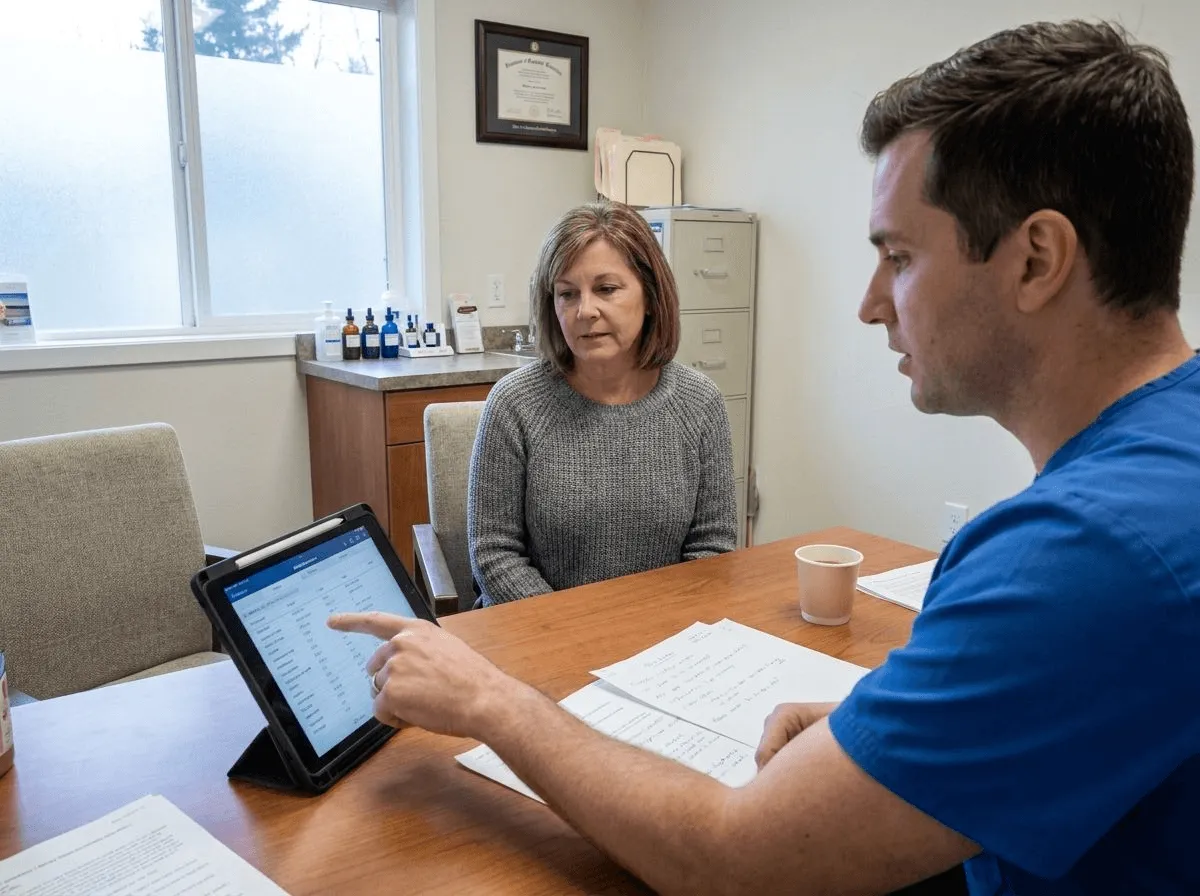
Your provider reviews your symptoms, medical history, current medications, menstrual or menopausal history where relevant, sleep, and lifestyle factors. Because hormone symptoms overlap heavily with thyroid disease, sleep disorders, depression, and medication effects, part of this visit is identifying what else could explain how you feel.
Comprehensive Hormone Panel
Baseline blood work establishes your levels. For women this typically covers estrogen, progesterone, testosterone, thyroid markers, DHEA, and cortisol. For men it covers total and free testosterone alongside estrogen, DHEA, thyroid, and metabolic markers. Our comprehensive labs service covers these panels.
Results Review and Treatment Plan
Your provider reviews the results with you in detail and explains whether they support hormone therapy. If they do, the plan covers which hormones are replaced, the delivery method, the starting dose, the monitoring schedule, and the known risks in your specific case. If they do not, your provider will tell you what the labs point to instead.
Delivery Method and Treatment Start
Pellets are inserted under the skin in a short in-office procedure and release hormone over a period of months. Injections follow a set schedule. Topical creams and gels are applied daily and carry handling instructions to avoid transfer to others in the household. Your provider covers the practical trade-offs of each.
Follow-Up Labs and Dose Adjustment
Repeat labs are drawn once treatment has been running long enough to be meaningful, then at intervals your provider sets. Results and symptoms are reviewed together, and dosing is adjusted, held, or discontinued based on what they actually show.
Ongoing Management
Hormone needs change with age, health status, stress, and life stage. Annual comprehensive panels and regular check-ins keep the protocol current rather than leaving a dose in place because it was right two years ago.
Ready to see if hormone replacement therapy is right for you?
$50 consultation fee, applied toward your first treatment. No pressure, no obligation.

Who Is and Is Not a Candidate
Candidacy is determined by lab work and clinical evaluation. The symptoms below are the ones that most commonly prompt patients to seek testing. They are not proof of hormone imbalance, and any of them can have a different cause.
- Hot flashes, night sweats, or other vasomotor symptoms
- Irregular or changing cycles during perimenopause
- Vaginal dryness or discomfort associated with menopause
- Sleep disruption that began alongside other hormonal changes
- Mood changes, irritability, or anxiety not explained by another condition
- Persistent fatigue and low energy
- Decreased libido in women or men
- Difficulty maintaining muscle mass or body composition despite consistent exercise
- Brain fog or difficulty concentrating
Is This Treatment Right for You?
Sound like you? Let's talk about your goals.
Book a Consultation- Women in perimenopause, menopause, or the post-menopausal years who want a lab-driven plan rather than a single prescription
- Patients who want the full hormone panel evaluated together, including thyroid, DHEA, and cortisol
- Patients who prefer bioidentical formulations and want a provider who works with them
- Patients who want ongoing lab monitoring and in-person visits rather than a mail-order service
- Patients who want to be tested first and are prepared to be told hormones are not the issue
- Men who want a comprehensive hormone evaluation. If the question is specifically about low testosterone, start with our men's testosterone replacement therapy page
- Not a candidate without further evaluation: patients with a history of hormone-sensitive cancer, blood clots, stroke, liver disease, or unexplained vaginal bleeding
- Not a candidate: patients who are pregnant or breastfeeding
What to Expect on Treatment
Hormone therapy has no recovery period in the way a procedure does. There is no downtime and you return to normal activity the same day. Pellet insertion sites may be tender or bruised briefly. What hormone therapy does have is a monitoring schedule, and the honest answer to what happens next is that it depends on your labs and your response.
We do not promise a timeline or a specific outcome. Response to hormone therapy varies considerably between individuals, and symptoms often shift at different rates from one another. Some patients notice change earlier, some later, and some find their symptoms were driven by something other than hormones. Rather than working from a promised schedule, your provider assesses your actual response using follow-up laboratory results and a structured symptom review, and adjusts from there.
The goal is not to move a number for its own sake. It is to find the levels at which you feel and function well, confirmed by labs, at a dose your provider considers appropriate for your health history. Hormone therapy carries known risks that vary by hormone, by delivery method, and by patient history. These are reviewed in detail at consultation and tracked through your monitoring labs. If your labs or symptoms indicate the therapy is not appropriate to continue, your provider will tell you, and stopping is part of the plan.
Body composition is one of the areas patients most often ask about. Rather than relying on scale weight, we can track lean mass and fat mass objectively over time with our InBody body composition service, which gives your provider a measurable data point alongside your labs.
History, symptom review, and clinical evaluation. The comprehensive hormone panel is ordered. No prescription is issued at this visit.
Blood draw for the full panel, with confirmatory or repeat testing where your provider considers it necessary before a treatment decision.
Your provider reviews the results with you and, if hormone therapy is indicated, treatment begins with the selected delivery method and starting dose. Risks specific to your history are covered before you start.
Repeat testing at the interval your provider sets for your delivery method. Levels are reviewed together with your symptoms, and dosing is adjusted from there.
Continued lab work and provider check-ins at defined intervals, with an annual comprehensive panel, for as long as therapy continues.
Common Questions About Hormone Replacement Therapy
What is bioidentical hormone replacement therapy?
BHRT uses hormones that are structurally identical to the ones your body produces, as opposed to synthetic hormones, which have a different molecular structure. Bioidentical formulations can be delivered as pellets, injections, or topical creams, and they are prescribed from your individual lab results. Many patients and providers prefer them for that structural match. Your provider will discuss what that does and does not mean for your situation during consultation.
Is hormone therapy different for women and men?
Yes. The hormonal profiles differ and so do the symptoms and the monitoring. For women, treatment often involves estrogen, progesterone, and testosterone assessed together, most commonly around perimenopause and menopause. For men, the focus is more often testosterone alongside the supporting panel. Both require individual lab work and scheduled monitoring. If your question is specifically about male testosterone, our men's testosterone replacement therapy service page covers how deficiency is diagnosed and what supervised TRT involves.
How is this page different from your men's testosterone therapy page?
This page covers the broad hormone program: the full panel, women's hormone therapy through perimenopause and menopause, and hormone care for men beyond testosterone alone. Our men's testosterone replacement therapy page covers male testosterone specifically, including how deficiency is confirmed by blood work, the delivery options, and the monitoring TRT requires. Many men start on one page and end up in the other once their full panel comes back, since testosterone is rarely the only marker worth reviewing.
Can hormone therapy help with menopause symptoms?
Managing symptoms associated with perimenopause and menopause, including hot flashes, night sweats, sleep disruption, mood change, and vaginal dryness, is one of the most common reasons patients come to us for hormone therapy. Whether it is appropriate for you depends on your lab results and your health history, including any history of hormone-sensitive cancer, blood clots, stroke, or liver disease. Your provider reviews those risks with you specifically rather than in the abstract.
What are the side effects of hormone therapy?
Side effects depend on which hormones are prescribed, at what dose, and by which delivery method. Reported effects during the early phase can include acne, fluid retention, breast tenderness, and mood fluctuation as levels stabilize. Pellet insertion can cause temporary soreness or bruising at the site. Hormone therapy also carries risks that require ongoing attention and vary by patient history. Lab monitoring and dose adjustment exist to manage this, and your provider reviews the risks specific to your profile before you begin.
How long before I notice a difference?
We will not give you a number, because we cannot honestly promise one. Response to hormone therapy varies between individuals, and different symptoms often shift at different rates. Rather than working from an expected timeline, your provider evaluates your actual response using follow-up laboratory results and a structured review of your symptoms, and adjusts dosing from there.
Does hormone therapy help with weight loss?
Hormonal changes can affect body composition, energy available for exercise, and metabolic health, so hormone status is worth evaluating when weight is a concern. Hormone therapy is not a weight loss treatment and we do not present it as one. For patients whose primary goal is weight management, our medical weight loss program is the more direct path, and the two are often run alongside each other. Our InBody body composition service tracks lean mass and fat mass either way.
Is hormone therapy safe long term?
Long-term appropriateness depends on the individual, which hormones are prescribed, the delivery method, the dose, and the health history involved. Known risks vary accordingly, and they are the reason this program is built around scheduled follow-up labs and provider review rather than an indefinite prescription. Your provider discusses the risks specific to your situation at consultation and reassesses them at every follow-up. Hormone therapy without lab monitoring is not supervised care, and we do not offer it that way.
Do you offer financing for hormone and lab services?
Yes. Allen Medical Aesthetics offers financing through Cherry, CareCredit, and Sunbit. Costs depend on your lab panel, your delivery method, and your monitoring schedule, so your provider reviews specifics with you during consultation. Call (206) 414-9979 with questions about financing before you book.
Explore Similar Services
Men's Testosterone Therapy
Medically supervised testosterone replacement therapy for men with lab-confirmed low testosterone.
Explore Men's Testosterone TherapyWellnessComprehensive Labs
Functional lab panels for hormone optimization, thyroid health, metabolic assessment, and nutrient analysis.
Explore Comprehensive LabsWellnessInBody Body Composition
Clinical-grade body composition analysis for medical weight loss and hormone therapy monitoring.
Explore InBody Body CompositionWellnessMedical Weight Loss
Clinically supervised weight management with semaglutide, tirzepatide, and evidence-based protocols.
Explore Medical Weight LossRelated Articles
BHRT for Men: Benefits, Risks, and What to Expect
Hormone replacement therapy is often associated with women navigating menopause, but men experience their own form of hormonal decline that can be equally disru...
Read article Hormone HealthSigns You May Need Hormone Replacement Therapy
The symptoms of hormonal imbalance rarely announce themselves clearly. There is no single moment when your body says, "Your hormones are off." Instead, the chan...
Read article Hormone HealthIV Hydration Therapy Benefits: What to Know Before Your First Session
IV hydration therapy has moved from hospital emergency rooms to wellness clinics, med spas, and even mobile services. Once reserved for patients who were severe...
Read articleAllen Medical Aesthetics serves patients from across the greater Seattle area. Visit our Des Moines, WA clinic for hormone replacement therapy.
Start With the Panel, Not the Prescription
Book a consultation at Allen Medical Aesthetics in Des Moines, WA to find out what your hormone levels actually show. Your evaluation starts with a clinical review and comprehensive lab work, and treatment follows only if the results support it. Board-certified medical director Tod Work, ARNP oversees all treatments. Call (206) 414-9979 or book online.
- Board-certified providers
- FDA-approved products only
- $50 consultation fee applied to treatment
- Transparent, honest pricing
- Individualized treatment plans
Request a Consultation
We will respond within one business day.
Thank you for reaching out.
We will respond within one business day. You can also call us at (206) 414-9979.
Something went wrong.
Please try again or call us directly at (206) 414-9979.